Research Terms
International Studies Military Sciences Military Strategy and Tactics Political Science International Relations International Politics Public Administration
Keywords
Civil-Military Relations Intelligence Studies International Relations Irregular Warfare Professional Military Educating/educating Practitioners Strategy U.s. Foreign Policy
| Ends | Title |
| 06-2029 |
IAE Global Account - Global and National Security Institute
IAE Global Account - Global and National Security Institute
Institute of Applied Engineering (IAE)
|
| 06-2029 |
IAE Global Account - Global and National Security Institute
IAE Global Account - Global and National Security Institute
Institute of Applied Engineering (IAE)
|
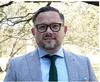
Dr. David P. Oakley is the Academic Director at the University of South Florida's Global and National Security Institute. Dave began his career as a field artillery officer where he served in various positions ranging from platoon leader to battery/company commander in South Korea and Fort Sill, Oklahoma. Following his initial active-duty stint, he was selected for the Central Intelligence Agency’s (CIA) Clandestine Service Trainee (CST) Program as a Staff Operations Officer (SOO). After graduating from the CIA’s SOO Certification Course, Dave served within the CIA’s Near East Division. Following his CIA service, Dave served as a contractor with the National Counterterrorism Center’s (NCTC) Directorate of Strategic Operational Planning. Dave returned to active duty as an Army strategist following his time at NCTC. His first assignment upon returning to active duty was as a planner and then Red Team member with the 1st Infantry Division (1ID) at Fort Riley, Kansas. In 2010, Dave deployed with 1ID to Iraq where he served as a liaison officer to the U.S. Embassy in Baghdad. In 2011, he moved to Fort Leavenworth, Kansas to attend the Command and General Staff School followed by the School of Advanced Military Studies (SAMS). In 2013, Dave departed Fort Leavenworth for Fort Sam Houston, Texas to serve as a planner with 5th Army/Army North, where he focused on defense support to civil authority missions. Dave's last assignment in the Army was as an assistant professor at National Defense University's College of International Security Affairs in Washington, D.C. where he taught classes on terrorism, counterterrorism, irregular warfare, homeland security, and strategy to senior military officers and government leaders from the U.S. and partner nations. Prior to his current position, Dave was an associate professor at Joint Special Operations University (JSOU). Dave is a Visiting Research Fellow at the King's Centre for the Study of Intelligence and is on the editorial boards for Intelligence and National Security, InterPopulum: Journal of Irregular Warfare and Special Operations?, and JSOU Press. Dave's book, Subordinating Intelligence: The DoD/CIA Post-Cold War Relationship, was published by the University Press of Kentucky.
Books
Chapters in Edited Books
Peer Reviewed Articles
Other Publications
British International Studies Association, Member; 2024 - present
Joint Special Operations University Press Editorial Board, Member; 2022 - present
Term Member Council on Foreign Relations, Member; 2013 - 2018
International Studies Association, Member; 2012 - present
American Political Science Associations, Member; 2011 - present
Association of Former Intelligence Officers, Member; 2010 - present
InterPopulum, InterPopulum; 2024 - 2025
Intelligence and National Security, Intelligence and National Security; 2022 - 2025
Dr. David P. Oakley is the Academic Director at the University of South Florida's Global and National Security Institute. Dave began his career as a field artillery officer where he served in various positions ranging from platoon leader to battery/company commander in South Korea and Fort Sill, Oklahoma. Following his initial active-duty stint, he was selected for the Central Intelligence Agency’s (CIA) Clandestine Service Trainee (CST) Program as a Staff Operations Officer (SOO). After graduating from the CIA’s SOO Certification Course, Dave served within the CIA’s Near East Division. Following his CIA service, Dave served as a contractor with the National Counterterrorism Center’s (NCTC) Directorate of Strategic Operational Planning. Dave returned to active duty as an Army strategist following his time at NCTC. His first assignment upon returning to active duty was as a planner and then Red Team member with the 1st Infantry Division (1ID) at Fort Riley, Kansas. In 2010, Dave deployed with 1ID to Iraq where he served as a liaison officer to the U.S. Embassy in Baghdad. In 2011, he moved to Fort Leavenworth, Kansas to attend the Command and General Staff School followed by the School of Advanced Military Studies (SAMS). In 2013, Dave departed Fort Leavenworth for Fort Sam Houston, Texas to serve as a planner with 5th Army/Army North, where he focused on defense support to civil authority missions. Dave's last assignment in the Army was as an assistant professor at National Defense University's College of International Security Affairs in Washington, D.C. where he taught classes on terrorism, counterterrorism, irregular warfare, homeland security, and strategy to senior military officers and government leaders from the U.S. and partner nations. Prior to his current position, Dave was an associate professor at Joint Special Operations University (JSOU). Dave is a Visiting Research Fellow at the King's Centre for the Study of Intelligence and is on the editorial boards for Intelligence and National Security, InterPopulum: Journal of Irregular Warfare and Special Operations?, and JSOU Press. Dave's book, Subordinating Intelligence: The DoD/CIA Post-Cold War Relationship, was published by the University Press of Kentucky.
Speaker Topics
Cia/dod Relations Civil/military Relations Homeland Security Intelligence Irregular Warfare Professional Military Educating/educating Practitioners U.s. Foreign Policy
Target Audiences
Fee Range
Global and National Security Institute
| Director |
Frank McKenzie (General, Ret.) |
| Phone | (813) 974-9800 |
| Website | https://www.usf.edu/gnsi/index.aspx |
| Mission | The Global and National Security Institute provides actionable solutions to 21st-century security challenges for decisionmakers at the local, state, national, and global level, focused on the intersection of security policy and technology. The University of South Florida’s Global and National Security Institute (GNSI) brings scholars, students, policymakers, and practitioners together to tackle the most pressing security challenges of our time. Anchored in rigorous, policy-relevant research and real-world collaboration, GNSI’s research spans the full spectrum from emerging technologies and strategic competition to the interplay of military and society, the resilience of governance, practitioner education, and the evolving role of intelligence. By integrating interdisciplinary expertise with practitioner partnerships across academia, government, industry, and civil society, the Institute delivers actionable insights that informs decision-making and advance security in ways consistent with democratic values. The Technology & Policy Research Area of Focus considers the evolution of technological and scientific progress as it relates to U.S. polices, economic competitiveness, and national security. This includes studying the bidirectional relationship between technological advancements to address societal problems and the ethical considerations surrounding their development. Current topics in this area of focus being researched include quantum information science technologies (QIST), AI/ML, advanced nuclear reactors, and marine critical minerals. Contact: Dr. Linda Nhon at nhonlinda@usf.edu. The Strategic Competition Research Area of Focus examines how global and regional powers interact to shape political, security, and economic landscapes. These studies focus on the interplay between great powers and regional actors, highlighting both cooperation and rivalry across overlapping spheres of influence. Current research pays particular attention to how Russia and Middle Eastern states pursue their independent and shared objectives, including the use of alliances, proxy networks, and diplomatic initiatives to influence regional order. Understanding these dynamics provides insight into the broader patterns of strategic competition that define the international system and informs how states navigate the balance between conflict, cooperation, and resilience. Contact: is Dr. Arman Mahmoudian at armanm@usf.edu. The Military & Society Research Area of Focus aims at dissecting at analyzing the multiple points of intersection between civilian society and the military, military service, and conflict, particularly via the institutions. It seeks to understand what is the meaning of military service for national communities and its direct impact on society, ranging from economic benefits to social prestige; to determine the proper degree of civilian oversight over the military; to assess the ability for civilian society and the industry to mobilize in support of the armed forces in case of war or national emergency; to define how governmental institutions manage and organize the relationship between civilian society and the military, from a budgetary point of view to military recruitment. Contact: Dr. Guido Rossi at guidorossi@usf.edu. The Resilience and Resistance Research Area of Focus investigates the robustness of current governance frameworks within a state and the capacity for resistance against dominant governance models. Understanding the resilience of both state and societal structures, along with recognizing and evaluating domestic resistance to these frameworks, is essential for grasping the broader human context required to understand intrastate conflict, as well as internationalized intrastate conflict. These data-centric studies enable democratic states and progressive institutions to enhance human security in situations where it is jeopardized – whether by authoritarian regimes or insufficient governance. Contact: Dr. Robert Burrell at robertburrell@usf.edu. The Educating the Practitioner Research Area of Focus is closely linked to the initiative of the same name which focuses on preparing both current and future national security professionals to navigate complex challenges. As a research area, Educating the Practitioner considers issues such as—What education do practitioners require for success in the current and future strategic environment? How should education be incorporated in career development? What are effective pedagogical approaches for educating practitioners? Much of the research is done collaboratively with practitioners, scholars, and other institutions focused on educating practitioners. Current collaborative research projects GNSI is involved in are—a Routledge Press handbook on Professional Military Education, an Intelligence and National Security journal special issue on educating intelligence professionals, and a Military Review special series on educating military practitioners. Contact: Dr. David P. Oakley at davidpoakley@usf.edu. The Intelligence Research Area of Focus examines how intelligence shapes strategy, security, and human affairs with particular attention to the United States. As a secret instrument of statecraft, intelligence has always been a feature of geopolitical conflict and competition, but its role is poised to grow as a product of the current international environment. Intelligence also poses profound challenges to representative democracy and civil liberties. Emergent technology, harnessed by both state and non-state actors for intelligence purposes, is further complicating the historical relationship between intelligence, state, and society. Understanding these broad themes is essential for policy-oriented rsearch that will address key tensions in civil-intelligence relations in the twenty-first century. Contact: Dr. Jeffrey Rogg at jrogg@usf.edu. |