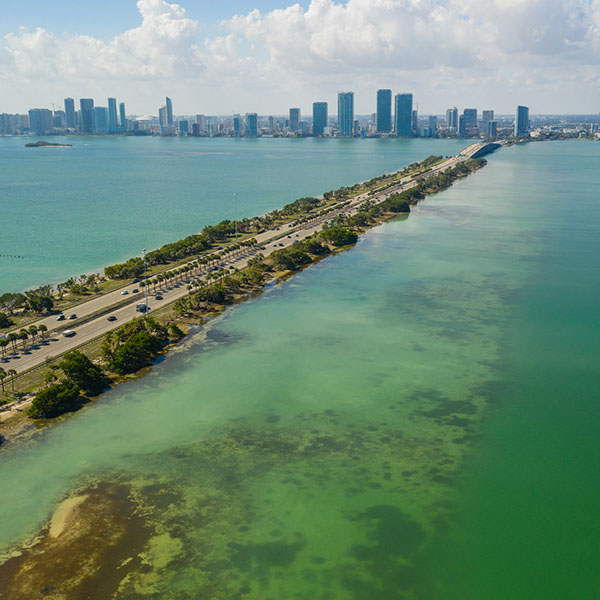
A team from UM and Miami-Dade County evaluated records of salinity, temperature, dissolved oxygen, and pH from 34 monitoring stations, comparing changes across decades, seasons, and geographic regions of Biscayne Bay to identify climate-related trends. They found that the bay has become warmer, saltier, and more acidic over the last two decades due to climate change and sea level rise.
The changes point to a shift away from fresher, estuarine conditions toward more ocean-like waters. “Biscayne Bay is changing in measurable ways as climate change accelerates,” says Maria Josefina Olascoaga. “These changes can affect seagrasses, fisheries, wildlife, and the broader coastal ecosystem that South Florida communities depend on.” The bay promotes coastal resilience and healthy seagrass ecosystems, which are vital sources of shelter and food for invertebrates, fish, sea turtles, manatees, and other animals.
View Related Expert Profiles: Go to Source