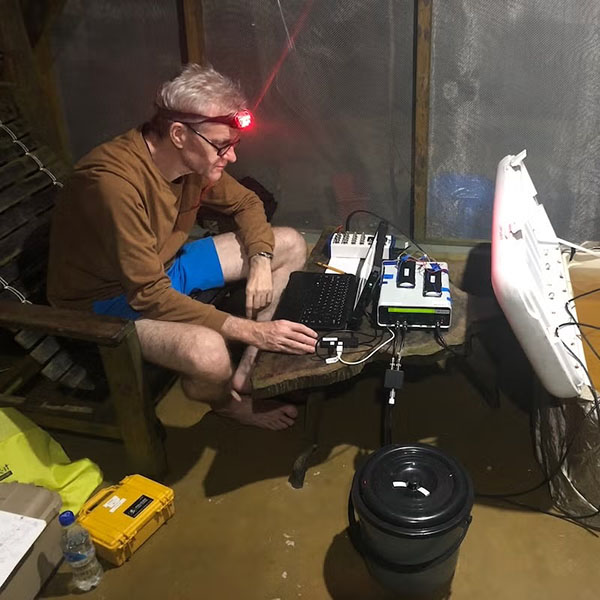
A UCF team deployed custom electric signal loggers along a section of an Amazonian stream. Each logger recorded 60-second segments of electric signals from electric eels and their weakly electric knifefish pretty. “Our loggers allowed us, for the first time, to monitor predator-prey electric signaling interactions continuously in the wild,” says William Crampton.
“Our findings show that active sensing creates a paradox: the same electric signals these animals need to navigate and hunt can also reveal them to eavesdropping predators or prey,” adds Crampton. The researchers discovered that both species use electric stealth, strategically turning their electric signals on to sense their environment but turning them off briefly to stay hidden when needed.
View Related Expert Profiles: Go to Source