
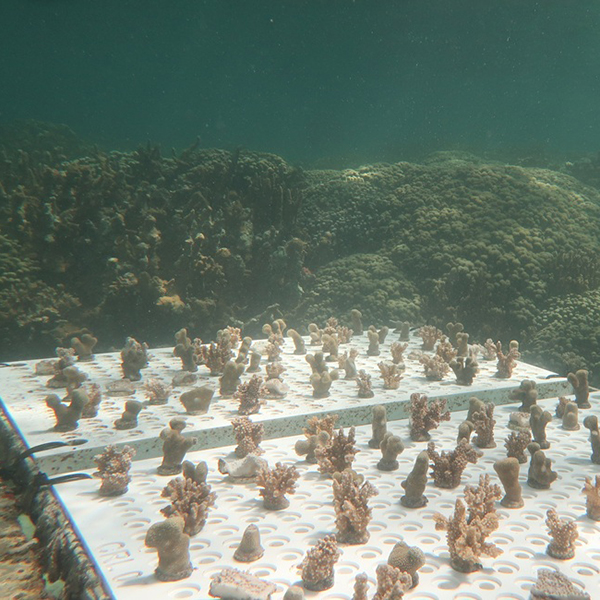
A team from FAU and the University of Hawai?i collected rice coral and finger coral from neighboring K?ne?ohe and Kailua bays with different environmental conditions to study how they respond to ocean heat. The team exposed the fragments to thermal stress in the lab and used pulse amplitude modulation fluorometry to measure photosynthetic efficiency as an indicator of physiological response to warming.
Finger coral from the cooler Ulupa?u area showed significantly greater thermal tolerance than = finger coral from K?ne?ohe Bay or rice coral from either location. That suggests both species and environmental history can influence how corals respond to warming oceans. “Understanding which corals can tolerate that stress – and why – will be critical for protecting and restoring reefs,” says researcher Joshua Voss.
View Related Expert Profiles: Go to Source
